Saturday, 5 September 2020

A Presbyterian moderator's insight

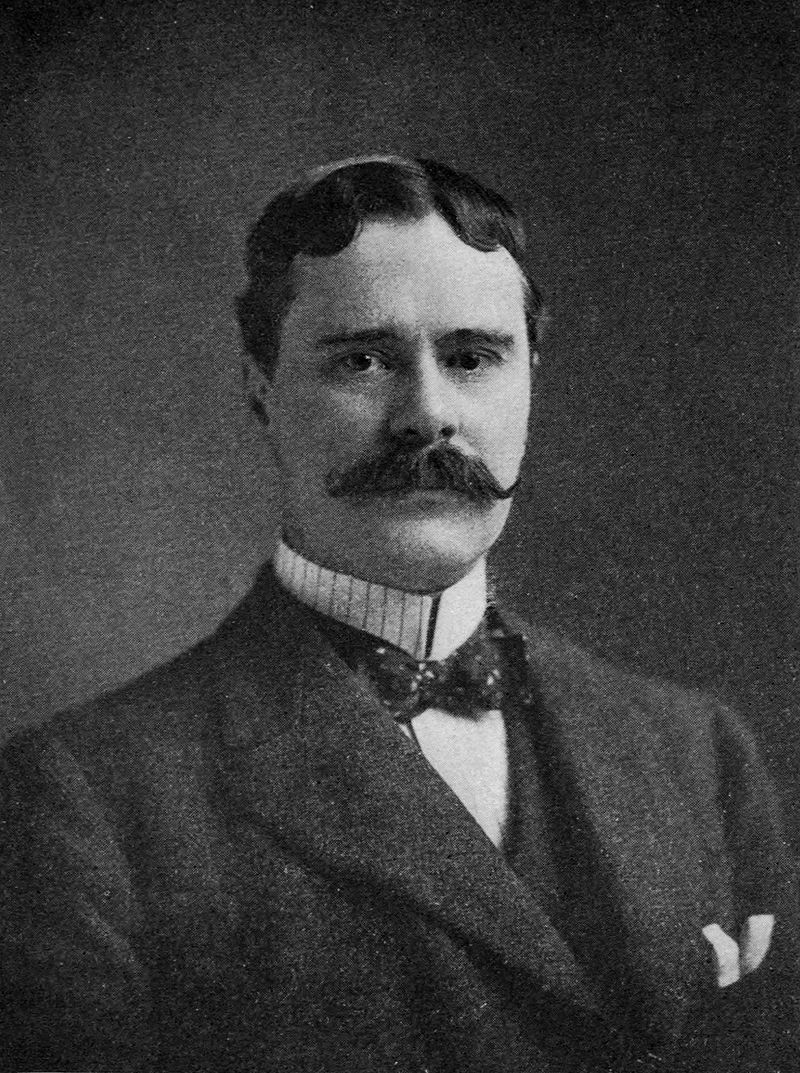
Rev Dr John Henry Orr was the moderator of the Presbyterian Church in 1887 and in that role he gave an address at an event in Londonderry on 23 August 1887 to honour the laying of the foundation stone of the new Town Hall.  

The function had been organised by The Honourable the Irish Society, which had a central role in the settlement of Londonderry in the 17th century.  In the course of his remarks Dr Orr said that the members of the Presbyterian Church had a peculiar aptitude for civic administration, arising, he believed, out of their Church system of self-government.

The system of presbyteries, kirk sessions and church committees involved members of the congregation in the governance of their churches and thereby members gained experience that stood them in good stead in civic society.


Dr John Henry Orr was minister of the High Street Presbyterian congregation in Antrim and for many years he was clerk of the General Assembly.

A similar observation has been made about the way in which Methodism in England provided a number of the early leaders of the trade union movement, who had gained experience as lay preachers in their local churches.  


Friday, 4 September 2020

Sir Charles Villiers Stanford - British Covenanter


Sir Charles Villiers Stanford (1852-1924) was born into a Protestant and Unionist family in Dublin but moved to England, where he played an important role in the renaissance of British classical music.

He lived through the three Home Rule crises and was a firm supporter of Ulster unionists in their opposition to Home Rule for Ireland.  

In 1913 he welcomed the formation of the Ulster Volunteer Force by Carson, Craig and the Ulster Unionist Council and in 1914 he signed the British Covenant, which was launched by the League of British Covenanters, who were British supporters of Ulster

Stanford's interest in Ulster was also reflected in his music, including his song settings of the Ulster-Scots poet John Stevenson's Pat McCarty: His Rhymes (1910), his Irish Rhapsody No 4 (1913), also known as The Fisherman of Lough Neagh and What He Saw and the Ulster March (1913).

The Unionist cause had the support of the overwhelming majority of Ulster Protestants but it also enjoyed substantial support in Great Britain, including that of prominent cultural figures such as Sir Charles Stanford, the poet Rudyard Kipling and Sir Edward Elgar, another important musician, who was a Roman Catholic.  

Advocating for the Union and cultivating support for the Union are vital for the preservation of the Union.


Friday, 24 April 2020

The New Lodge mural that celebrates a unionist


This photograph of a wall mural appeared recently in a local Belfast newspaper.  

The mural is in the Nationalist New Lodge Road area of north Belfast and depicts Dr William Drennan (1754-1820), a Belfast-born Presbyterian who was the founder of the Society of United Irishmen.

Most of the murals in that area depict Irish republicans so it is nice to see that they also have a mural of a former United Irishman who became reconciled to the Act of Union.

Indeed in the Belfast Monthly Magazine on 31 December 1811 he urged his readers to:
Be Britons with all your souls - and forget that your father called himself an Irishman.
Now the mural, as we see it in the photograph is not in great shape.  It clearly needs repainted.  So perhaps when someone gets round to refreshing the mural of William Drennan they might consider a new quotation, such as one above.

Those words would look well on a wall in the New Lodge - 'Be Britons with all your souls - and forget that your father called himself an Irishman.'


Wednesday, 22 April 2020

An Irish-American attack on the Scotch-Irish

From Migration to Music: The Scotch-Irish Contributions to America ...The Scotch-Irish Society of America was founded in 1889 under the presidency of Robert Bonner (1824-1899), a wealthy New York newspaperman and a Presbyterian Ulster-Scot who had emigrated from Londonderry.

It held its first Congress in Columbia, Tennessee, in May 1889, its second Congress in Pittsburgh, Pennsylvania, in June 1890, its third Congress in Louisville, Kentucky, in May 1891 and a fourth Congress in Atlanta, Georgia, in April 1892.  These continued for a number of years and the proceedings were published in bound volumes.

That fourth Congress ended on 1 May 1892 and a week later it drew an angry response in a weekly Pittsburgh newspaper, the Irish Pennsylvanian, which was edited by John Flannery, an Irish-American activist and a former miners' organiser.  

The newspaper, which was also known as the Irish Pennsylvanian and Catholic News, was published from 1890 to 1921 but Flannery was not particularly well regarded by some sections of Irish-American opinion.  When Paul Sheedy wrote to the Fenian leader John Devoy on 11 November 1895 he said of Flannery: 'He is ready to do anything for a dollar.'

Nevertheless his attack on the Scotch-Irish is worth examining for what it tells about Irish-American thinking at that time.

The response to the fourth Scotch-Irish Congress was published under the title THE SCOTCH-IRISH and deployed several fallacies in support of its argument.

The first was to attack the validity of the term Scotch-Irish:
The whole idea of Scotch-Irish is a new-fangled notion, first promulgated in America.  It was born of sheer ignorance, and pharisaical pride.  There never was a true, whole-souled Irishman yet who unless he was ignorant of the facts, would claim such a bastard, mongrel, origin.  
The name was not known when glorious Henry Joy McCracken and Henry Monroe led the Irish Northern Presbyterians against the British at Ballynahinch. ... The words Scotch-Irish had not emanated from the brain of some bawbee-scraping lowland Scotchman when old Andrew Jackson, with the fires of Shane O'Neill blazing in his eyes, gave an Irish-American greeting to the British hirelings at New Orleans. ... This Scotch-Irish idea ought to be abandoned.
Scots-Irish-settlementThe author of this diatribe was clearly unaware of the fact that the term 'Scotch-Irish' was recorded in Maryland as early as 1689/1690, a full century before the Henry Joy McCracken took part in the 1798 rebellion and 125 years before Andrew Jackson fought the Battle of New Orleans in 1815.

When the Irish Pennsylvanian published the article in 1892, the term Scotch-Irish had been in use for at least two centuries and yet the writer dismissed it as 'a new-fangled notion'.

The second was to argue that Scottish names were really of Irish origin and one example cited was:
The Lindsays come from one of the Lynotts who escaped the massacre of his family by the Barretts of Tyrawley in Connaught.
In fact the name Lindsay is of Old British and Anglo-Norman origin.  The name was brought to Britain with the Anglo-Normans who came to England with William the Conqueror in 1066. and from there it was taken north to Scotland and was recorded there in 1180.

As regards the Lynotts I understand the name was brought to Ireland by Anglo-Normans or Cambro-Normans who came from England or Wales and settled in Connaught in the 13th century.

So both names have an Anglo-Norman origin and neither has a Gaelic origin!

No photo description available.That article was written in 1892 and in 1897 a number of Irish-Americans formed the American Irish Historical Society, which stridently opposed the use of the term Scotch-Irish.

More than a century later there are still some Irish propagandists who try to deny the legitimacy of those who identify as Ulster-Scots on this side of the Atlantic or Scotch-Irish on the other side.

Moreover they still deploy many of the same false arguments and they often display the same intolerance.

Thankfully their arguments are easily exposed and refuted.

We should be able to celebrate our cultural traditions and cultural identities without castigating or denigrating others.


Friday, 17 April 2020

America's debt to Ulster

Owen Wister.jpg
Owen Wister (1860-1938) was an American author and historian.  He is best remembered as the author of The Virginian and a biography of Ulysses S Grant and he was a lifelong friend of President Theodore Roosevelt

Wister was a supporter of the unionist cause in Ulster and in his book A Straight Deal Or The Ancient Grudge (1920) he wrote: 

'Americans are being told in these days that they owe a debt of support to Irish independence, because the Irish fought with us in our own struggle for independence.  Yes, the Irish did, and we do owe them a debt of support. But it was the Orange Irish who fought in our Revolution, not the Green Irish.' [p 259]

He went on to quote his good friend Theodore Roosevelt who wrote in his History of New York:
'It is a curious fact that in the Revolutionary War the Germans and Catholic Irish should have furnished the bulk of the auxiliaries to the regular English soldiers;  ... the fiercest and most ardent Americans of all, however, were the Presbyterian Irish settlers and their descendants.' [p 133]

At that time in the early years of the 20th century Irish republicans were endeavouring to gain American support for their cause.  They had support among a core of Irish-Americans but Americans in general were not deceived by fabricated arguments such as that identified by Owen Wister.

His book illustrates the understanding that there was at that time of the Ulster unionist cause in countries such as the United States of America and it is significant that it was penned by someone who was a close friend of some of the leading figures of the day.

Monday, 30 March 2020

Bute House was once the family home of a Unionist MP


Bute House in Edinburgh is the official residence of the First Minister of Scotland and currently occupied by Nicola Sturgeon of the SNP.

However it was once the childhood home of a Scot who was the Unionist MP for North Down from 1910 to 1918.  

Lord Selsdon.jpg
William Mitchell-Thomson MP
His name was Sir William Mitchell-Thomson (1877-1938) and he was the son of Sir Mitchell Mitchell-Thomson FRSE FSA (1846-1918), a Scottish merchant and businessman who served as Lord Provost of Edinburgh from 1897 to 1900.

He was born at 7 Carlton Terrace in Edinburgh on 15 April 1877 but his father bought Bute House after the death of the previous owner in 1887 and lived there for thirty years until his death in 1918,

William Mitchell-Thomson was married in 1907 and presumably thereafter he had his own residence but during the time that he was MP for North Down, a period that covered the home rule crisis and the Great War, he would have been a regular visitor to his father's home at Bute House.

The grandeur of the house reflected the wealth and influence of the family and such influence played an important part in the Ulster Unionist campaign against home rule.


Sunday, 22 March 2020

'I was in the Spirit on the Lord's day'

We hear a lot today about 'self-isolation' and 'social distancing' and those words remind me of a man in the Bible who also experienced isolation and social distancing.

John had been a disciple of Jesus, one of the twelve, and is described as 'the disciple whom Jesus loved'.  He had served the Lord faithfully and had already written four books of the New Testament.

However there was a time when Christians were experiencing persecution by the Roman authorities and John was banished into exile, to Patmos, a small, rocky island in the Aegean Sea.  By then he was well on in years and the last remaining of the twelve disciples.

In Revelation 1:9 he wrote: 'I John, who also am your brother, and companion in tribulation ... was in the isle that is called Patmos, for the word of God and the testimony of Jesus Christ.'

He was far away from his friends and his fellow believers and he was unable to meet with them on the Lord's Day as he would normally have done (Hebrews 10:25).  There on Patmos he experienced isolation and tribulation but he was able to say that he was 'in the Spirit' on the Lord's Day.

Image result for patmos mapHe was isolated from his fellow-believers and he was far distant from them but there on Patmos he met with God and God met with him.  Indeed God spoke to him, giving him a wonderful revelation, which is now the last book in the Bible.

Even though we may not be able to meet today, at least physically, with other believers, other than those in our immediate household we can meet with God.  We too can be 'in the Spirit on the Lord's Day.

The phrase that is translated 'the Lord's Day' is different from 'the day of the Lord' and appears only once in the New Testament.

Moreover the same word that is translated 'the Lord's' appears in only one other place in the New Testament and that is in the phrase the Lord's Supper.  I believe that links the two together - the Lord's Supper and the Lord's Day.

The Lord's Supper is a reminder of the Lord Jesus Christ dying as our substitute, for our sin, at Calvary..

The Lord's Day is a reminder of the Lord Jesus Christ rising from the dead on the first day of the week (John 20:1).

Living He loved me, dying He saved me;
Buried He carried my sins far away;
Rising He justified, freely forever;
One day He's coming, O glorious day.
John Wilbur Chapman (1859-1918)

If we know Him as our Saviour and Lord, the one who died for us, the one who rose for us, and the one who is coming again for us, then we too can be 'in the Spirit on the Lord's Day', wherever we may be.